

Transforming Soundscapes: Embrace Personalization Through Ai Innovation
By Tom Seest
At PodcastBig, we help people who want to learn about podcasting by collating information and news about podcasting.
Be sure to read our other related stories at PodcastBig to learn more about podcasting.
The End Of Generic Music Beds – AI Makes Them Unique
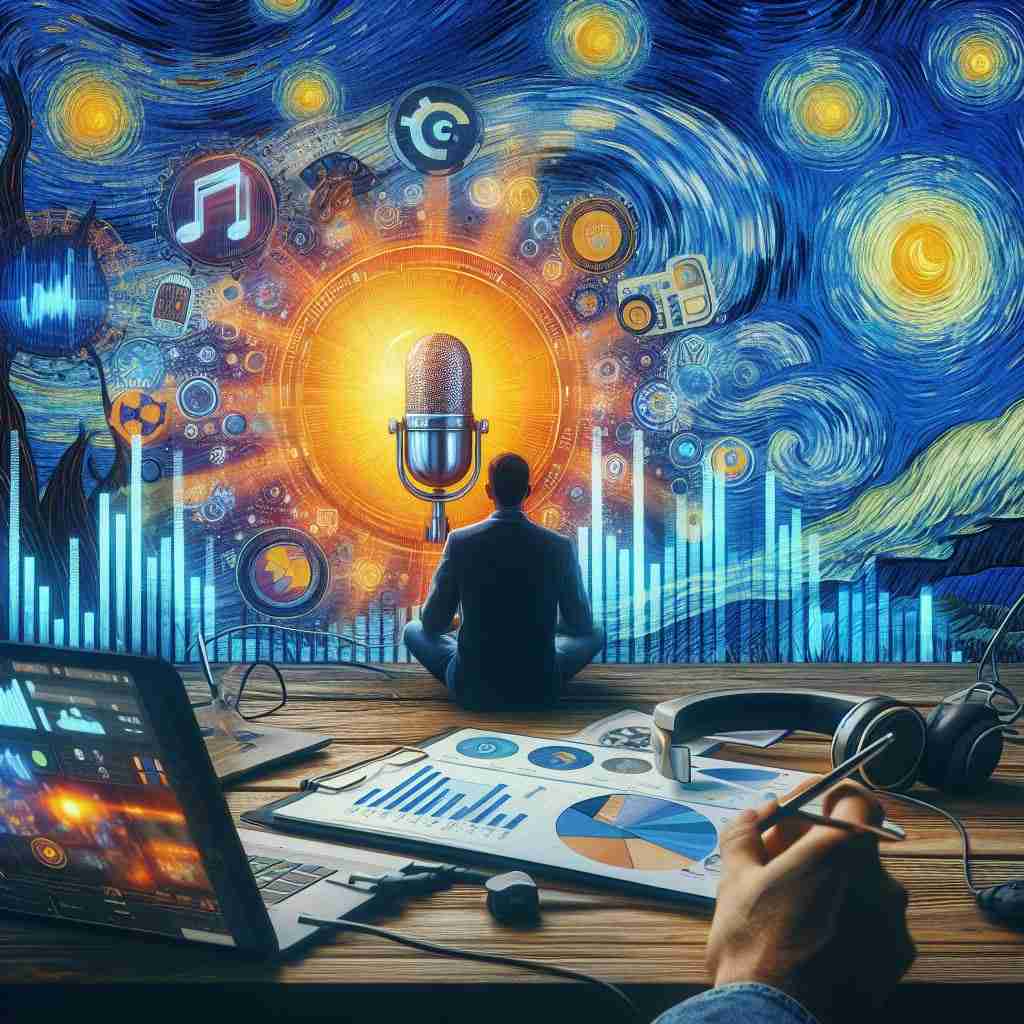
The shift from generic music beds to uniquely crafted soundscapes isn’t just a technical advancement; it’s a revolution in how we experience audio, especially in the world of podcasts. Picture this: you’re settling into your favorite chair, the kind that’s molded to your body just right, and the podcast begins. Immediately, you’re enveloped by not just words but a symphony that resonates with the story being told. This isn’t the standard elevator music we often hear; it’s an auditory experience that connects with us—body, mind, and spirit.
Let’s drill down to the heart of it. What made those predictable, generic music beds ubiquitous? They were safe. They blended into the background, easily ignored, a musical wallpaper that helped fill the silence. But as we dive deeper into the narrative age of podcasts, people crave something more. They want sound that speaks to them, sound that enhances their emotional journey. A well-crafted track can evoke nostalgia, excitement, or even a sense of urgency—elements of storytelling that encapsulate our human experience. When a podcast integrates a unique musical score, it provides a backdrop that amplifies the message, making the story linger long after the episode ends.
From a rational standpoint, the rise of AI-generated music is groundbreaking. Imagine algorithms capable of analyzing the emotional arc of your story and generating a score that aligns perfectly with each twist and turn. This isn’t merely about convenience; it’s about elevating the entire podcasting landscape. Independent creators can now access tailored music, leveling the playing field and allowing diverse voices to flourish.
Ethically, we’re also moving away from the reliance on stock music, often devoid of the cultural nuances that represent the diverse communities producing content today. AI allows for a blend of creative inputs that honor these narratives while pushing the boundaries of personalization. This is an opportunity to break free from the conformity of generic sounds and create a tapestry of unique auditory experiences.
This shift invites listeners to not just consume, but to engage. It asks us to lean in, feel, and understand the stories being told. When music is no longer just background noise but an integral part of the narrative, we are sent on a journey together. So, as you cue up your next podcast, remember: it’s not just what you hear; it’s about the entire experience—the connection, the emotion, the story you’re a part of. Embrace the evolution of sound; let it inspire and transform every moment you share.
The End Of Generic Music Beds – AI Makes Them Unique
The End Of Generic Music Beds – AI Makes Them Unique
- The transition from generic music beds to custom soundscapes is revolutionizing audio experiences in podcasts.
- Unique soundscapes enhance storytelling, connecting with listeners on emotional and sensory levels.
- Traditional music beds were safe and easily ignored, failing to engage audiences meaningfully.
- Listeners are seeking soundtracks that evoke deep emotions and enrich their narrative journeys.
- AI-generated music allows for personalized scores that complement storytelling by analyzing emotional arcs.
- This technology democratizes access to tailored music, empowering independent creators and diverse voices.
- The change invites listeners to actively engage with content, transforming audio into an immersive experience.

The End Of Generic Music Beds – AI Makes Them Unique
Table Of Contents
- The End Of Generic Music Beds – AI Makes Them Unique
- What Emotions Does Music Uniquely Evoke In Your Memories?
- How Can AI Music Transform Your Storytelling Experience?
- In What Ways Do You Think Unique Soundscapes Influence Mood?
- What Ethical Considerations Arise When Using AI In Music Creation?
- How Has Personalized Music Impacted Your Daily Life Choices?
- What Role Does Authority Play In Establishing Music Quality?
- How Do You Feel When Listening to Music Tailored Just for You?
- Conclusion
- Other Resources
- Glossary Of Terms
- Other Questions
- Haiku
- Poem
- Checklist
What Emotions Does Music Uniquely Evoke In Your Memories?
Picture this: you’re driving down a winding road, the sun setting on the horizon, and your favorite song comes on the radio. Suddenly, a wave of nostalgia washes over you, transporting you back to a time when life felt simpler, more vibrant. Music has that extraordinary power—it acts as a time capsule, capturing not just sounds but emotions tethered to memories we might otherwise forget.
Consider your earliest school days. Remember the excitement of the last school bell ringing? That moment was often accompanied by the vibrant melodies of pop songs that seemed to define your youth. Those tunes didn’t just score your teenage angst; they became the backdrop to friendships, heartbreaks, and moments of sheer joy. Every time a familiar note drifts into your ears, it’s like reuniting with old friends, bringing back laughter, tears, and everything in between.
But why does music hold such sway over our memories? Interestingly, it intertwines with our cognitive functions in ways we’re only beginning to understand. Research suggests that music activates the brain’s reward system. This explains why a beloved track has the power to lift our spirits or evoke heartache, connecting us deeply to our own life narratives. It’s emotional, yes, but also rational—our brains are hardwired to associate specific melodies with formative experiences. The connection between sound and memory goes beyond mere preference; it’s about identity.
I once spoke with a veteran who shared how a particular song grounded him during his time in service. Whenever he heard it, he was reminded of home, love, and unseen friends waiting for his return. Music became a lifeline, a bridge between the chaos of war and the warmth of waiting arms. That story is a testament to music’s profound ethical weight; it doesn’t merely entertain but also carries the heavy burden of our collective memories.
In our fast-paced lives, we often overlook this connection. We may hear music passively but seldom pause to reflect on its significance. The next time you find yourself in a moment of silence, consider embracing that silence with a song that resonates with you. Let it stir memories, evoke emotions, and remind you of the powerful tapestry of your life woven through sound. After all, life is a collection of moments, and music is often the thread that binds them together.
So, tune in, reminisce, and let each note remind you of who you are—because in that symphony of memories lies the essence of your journey.

What Emotions Does Music Uniquely Evoke In Your Memories?
What Emotions Does Music Uniquely Evoke In Your Memories?
- Music acts as a time capsule, capturing sounds and emotions tied to memories.
- Early school days often featured pop songs, marking significant life moments.
- Familiar tunes evoke nostalgia, bringing back feelings of joy and connection.
- Music activates the brain’s reward system, influencing moods and memories.
- Specific melodies are hardwired to formative experiences and personal identity.
- Music serves as a lifeline and a reminder of home during challenging times.
- Reflecting on music can enhance awareness of its importance in our lives.

What Emotions Does Music Uniquely Evoke In Your Memories?
How Can AI Music Transform Your Storytelling Experience?
Imagine you’re gathered around a crackling fire, sharing tales that resonate deep within your soul. Now, envision replacing the storyteller’s voice with a melody crafted by an AI, tailored not just to the narrative but to the very emotions that story evokes. AI music stands at the intersection of innovation and tradition, transforming the way we tell stories by infusing them with an emotional depth that can surpass mere words.
Think of the last time a song made your heart race or brought tears to your eyes. Music has a unique ability to transcend barriers, speaking directly to our feelings. When integrated into storytelling, AI-generated music can elevate moments, creating soundscapes that reflect the highs and lows of a narrative. This isn’t just background music; it’s an emotional backbone. A well-placed melody can signal impending danger, celebrate victory, or evoke nostalgia, weaving an intricate tapestry of sound and story that grips the audience’s heart.
From a rational perspective, consider the sheer capability of AI to analyze vast amounts of data, learning what types of music resonate across different demographics and cultures. It can tailor tunes for specific audiences, ensuring each note strikes a chord with the listener, making stories more relatable and impactful. This data-driven approach provides storytellers with a powerful tool to not only engage their audience but to create a communal experience. People bond over shared emotional responses to music, forming connections that transcend the boundaries of language or culture.
Ethically, the question arises: Is AI music less authentic? Here lies an engaging conversation. While some may argue that music lacks the human touch, one must remember that every genre we cherish today evolved through collaboration—between human artists and the technology that shaped them. AI can serve as both a collaborator and a tool, allowing storytellers to explore new creative territories without losing their unique voice.
In a world where personalization reigns supreme, AI music is not merely a novelty; it’s an opportunity for deeper connection. Imagine a podcast where each episode is paired with a unique musical score, enhancing the storyline and engaging listeners further. It’s about crafting a rich, immersive environment where audiences feel not just spectators but participants in a shared journey. By embracing this new musical frontier, we are, in essence, inviting everyone to the campfire, ensuring that every story is not just heard but felt.

How Can AI Music Transform Your Storytelling Experience?
How Can AI Music Transform Your Storytelling Experience?
- AI music blends innovation and tradition, enriching storytelling with emotional depth.
- Music transcends barriers, enhancing narratives and creating soundscapes that reflect emotions.
- AI can analyze data to create tailored music for specific audiences, making stories more impactful.
- This data-driven approach fosters community by bonding people through shared emotional responses to music.
- The authenticity of AI music is debated, but it can complement human creativity in storytelling.
- AI music offers opportunities for deeper connections, enhancing experiences like podcasts with unique scores.
- Embracing AI in storytelling invites inclusive experiences, ensuring every story resonates and is felt.

How Can AI Music Transform Your Storytelling Experience?
In What Ways Do You Think Unique Soundscapes Influence Mood?
In what ways do you think unique soundscapes influence mood? Sound has an incredible ability to connect with us on a visceral level, shaping our emotional landscape while we navigate the complexities of everyday life. Imagine walking through a forest, the rustling leaves and chirping birds creating a living soundtrack. This symphony of nature can instantly transform stress into serenity, turning mundane thoughts into moments of clarity. It’s remarkable how certain soundscapes, crafted by nature or human hands, can cradle our moods and guide our emotional responses.
When we listen to a podcast, for example, the ambient sound plays a crucial role in how we engage with the narrative. A well-curated background can evoke nostalgia, ignite passion, or instill calmness. Think about the soothing tones of a gentle stream. Just like a skilled storyteller, the right sound invites you to lean in closer, to listen more intently. It’s not just about the words we hear; it’s about the feelings they evoke. It’s a reminder of our shared humanity, fostering connections across distance.
Unique soundscapes also tap into our ethical and moral sensibilities. Consider the call of a distant whale or the sound of a thunderstorm—it compels us to reflect on our role in the natural world. We find ourselves grappling with our responsibility to protect these soundscapes, which are intrinsically linked to the well-being of both our planet and ourselves. When we immerse ourselves in these environments, we’re not just passive listeners; we become stewards of their preservation.
Rationally, the link between sound and mood is irrefutable. Scientific studies show that certain frequencies can influence our brain waves, promoting relaxation or stimulating creativity. It strikes at the very core of our existence—an invitation to harness these unique auditory experiences for better mental health.
Consider a moment when you’ve felt overwhelmed. Perhaps you turned to music or nature sounds to ease your mind. That’s not just a coincidence; it’s a testament to the profound impact of our auditory environment. We all have the power to create soundscapes that uplift and inspire, whether that’s through our chosen playlists or simply choosing to spend time in a quiet park.
Every time we engage with sound, we’re not just hearing; we’re connecting to a deeper, more profound rhythm of life. Let’s embrace those soundscapes. The next time you feel the weight of the world on your shoulders, remember there’s a symphony waiting to be heard, one that can authentically change your mood and perspective.

In What Ways Do You Think Unique Soundscapes Influence Mood?
In What Ways Do You Think Unique Soundscapes Influence Mood?
- Unique soundscapes connect with us emotionally, shaping our mood and clarity.
- Natural sounds, such as rustling leaves and birds, can transform stress into serenity.
- Ambient sounds in podcasts enhance engagement by evoking nostalgia, passion, or calmness.
- Soundscapes stimulate ethical reflection, reminding us of our role in protecting nature.
- Scientific studies link specific sound frequencies to relaxation and creativity.
- Personal experiences with music and nature highlight the profound effects on mental health.
- Embracing soundscapes has the potential to uplift our spirits and alter our perspectives.

In What Ways Do You Think Unique Soundscapes Influence Mood?
What Ethical Considerations Arise When Using AI In Music Creation?
In a world where technology evolves at lightning speed, the intersection of artificial intelligence and music creation raises ethical questions that go far beyond mere data and algorithms. Imagine a young musician pouring their heart into crafting a song: each strum of the guitar, each lyric, an intimate expression of their story. Now, envision an AI program that can churn out hits in seconds, crunching millions of data points, mirroring styles and genres while sidestepping that raw, human emotion. This juxtaposition stirs something deep within – a mix of wonder and unease.
The heart of the matter lies in authenticity. When AI generates music, are we losing the soul that artists infuse into their creations? Consider your favorite podcast, where stories resonate because they come from lived experiences. AI lacks the lived journey, the sweat, and the tears that accompany true artistry. As listeners, we crave connection – a melody that stirs memories, a rhythm that moves us. Yet, if AI takes center stage, are we left with mere imitations? This comes to the forefront when we think about the implications for aspiring musicians who may feel overshadowed.
Rationally, there’s the business angle: copyright concerns, artistic ownership, and fair compensation. If an AI tool produces a chart-topping song, who reaps the rewards? The developer? The user? The artist whose untapped creativity inspired the machine? This raises the ethical question of what it means to be an artist in an era of ever-advancing technology. Herein lies a unique perspective: can collaboration with AI create a new genre altogether—an authentic blend of man and machine?
Socially, as music becomes more accessible through AI, will we sacrifice diversity for uniformity? Each genre reflects cultural nuances, and the automation of sound threatens to dilute local flavors. Music, after all, is a powerful vehicle for change and expression. The cacophony of voices, when harmonized, has the potential to inspire action and connect communities.
Using AI in music isn’t inherently bad; it offers exciting possibilities. But the ethical considerations demand thoughtful conversations—community dialogue that invites every voice to the table, ensuring that the heart, head, and gut of music remain intact. The journey into this brave new world should be carefully navigated, fostering trust and encouraging the kind of innovation that celebrates, rather than eclipses, the human spirit.

What Ethical Considerations Arise When Using AI In Music Creation?
What Ethical Considerations Arise When Using AI In Music Creation?
- The rapid evolution of technology raises ethical questions at the intersection of AI and music creation.
- AI can produce music quickly, but lacks the emotional depth and authenticity of human artists.
- True artistry comes from lived experiences, which AI cannot replicate.
- Concerns about copyright, artistic ownership, and fair compensation arise when AI generates hits.
- A collaboration between AI and humans could lead to new musical genres.
- There is a risk that AI may dilute cultural diversity in music through uniformity.
- Open dialogue is essential to ensure that innovation in music honors the human spirit.

What Ethical Considerations Arise When Using AI In Music Creation?
How Has Personalized Music Impacted Your Daily Life Choices?
Personalized music has a remarkable way of weaving itself into the fabric of our daily lives, often dictating our moods, choices, and even our interactions. Imagine waking up each morning, reaching for your phone, and there it is—a carefully curated playlist that knows you better than your closest friends. It’s not just about the tunes; it’s about the soundtrack to your life’s moments.
The morning starts with upbeat tracks, nudging you to shake off the sleep and step into the day. Those songs don’t just play; they resonate, becoming anthems of ambition. As you move through your day—work meetings, grocery store runs, or a simple walk—your personalized playlist shapes not just the environment but your decisions. You might take a longer route, drawn by a nostalgic melody that pulls on your heartstrings, reminding you of a time when life felt simpler. In that moment, music becomes more than sound; it becomes a bridge to the past, stirring emotions that guide your choices.
Consider the power of an intimate evening—dinner with a partner, the candles flickering softly. A personalized playlist can evoke memories that spark deeper conversations. “Remember that trip to the coast?” you might ask, the perfect tune playing in the background. The right song can transform an ordinary dinner into a tapestry of shared experiences, reminding us of love, laughter, and the journey we’ve walked together.
This is where personalized music stands out. It’s no longer just about art; it’s an ethical canvas that reflects our lives. With streaming platforms acting as modern-day DJs, we feel a sense of ownership over our auditory experiences. We’re not passive listeners; we’re curators of our own soundtracks. Each song we choose to play is a choice we make about the life we want to lead, the emotions we wish to cultivate, and the connections we hope to strengthen.
Let’s not underestimate the communal aspect, either. How many times have you bonded over a shared love for a song? A podcast host similarly weaves personal stories with relatable commentary, inviting listeners into a conversation that feels intimate. Our playlists are the unsung podcasts of our lives—each track a story, each melody a confession.
In this way, personalized music is more than a mere convenience. It’s an invitation to explore who we are, who we want to be, and how we connect with others. Each note helps shape our identity, guiding our choices while building bonds that transcend the everyday.
How Has Personalized Music Impacted Your Daily Life Choices?
How Has Personalized Music Impacted Your Daily Life Choices?
- Personalized music influences daily life, shaping moods and interactions.
- Curated playlists serve as soundtracks for various moments, from waking up to intimate dinners.
- Morning tracks energize individuals, acting as anthems of ambition.
- Nostalgic melodies can evoke past memories, impacting decision-making.
- Music deepens connections during shared experiences, enhancing conversations.
- Streaming platforms empower users to curate personal soundtracks, fostering a sense of ownership.
- Personalized music reflects identity, guiding choices and strengthening bonds with others.

How Has Personalized Music Impacted Your Daily Life Choices?
What Role Does Authority Play In Establishing Music Quality?
Authority in music is a complex tapestry woven from history, expertise, and personal experience. It shapes the way we perceive quality, yet it also reveals the vulnerabilities inherent in our musical connections. Imagine, for a moment, the local band that pours their hearts out in a small bar. They may not have the polished sounds of a top-charting artist, but their authenticity resonates deeply. In this instance, the authority is rooted in their stories, struggles, and the raw energy they bring. Their music carries a weight that transcends technical perfection, reinforcing that quality can often be measured beyond the metrics of traditional authority.
Consider the evolution of musical tastes. What’s deemed “quality” often hinges on who’s proclaiming it. Record labels, critics, and even social media influencers wield considerable power over what we value as good music. This gatekeeping not only shapes our choices but also creates a divide between mainstream and underground. When these authorities speak, they command attention; but therein lies the danger: the risk of stifling innovation and the voices of those who might have something truly groundbreaking to offer. It’s tempting to trust the expert—after all, their recommendations are clad in experience and knowledge. Yet, what if the magic lies in the unexplored territory of amateur artistry?
Listening to a variety of music exposes us to diverse perspectives; this, in itself, establishes a new kind of authority. Take, for example, a community podcast dedicated to sharing the hidden gems of independent artists. These unsung heroes, often overlooked, provide a refreshing narrative on the music quality that resonants with our passions and fears. This creates an emotional connection, reminding us that great music evolves through shared experiences and genuine human expression. It releases us from the confines of convention, inviting us to chart our own musical paths.
Authority is not merely the directive voice of experience; it’s also about fostering a communal understanding of quality that invites listening, sharing, and discovering. When we embrace diverse musical influences, we not only enrich our own lives but also empower others to express their authentic selves. Quality, then, emerges from a tapestry of voices rather than a monolithic declaration from the top. It starts conversations, ignites passions, and cultivates trust in a world that thrives on the collective heartbeat of music. So next time you press play, remember: the authority of music resides not just in accolades but in the bonds it helps us forge.

What Role Does Authority Play In Establishing Music Quality?
What Role Does Authority Play In Establishing Music Quality?
- Authority in music is shaped by history, expertise, and personal experience.
- Authenticity from local bands can resonate more than polished sounds of mainstream artists.
- Musical quality is often defined by those proclaiming it, including record labels and critics.
- Gatekeeping can stifle innovation and obscure groundbreaking voices in music.
- Diversity in music listening establishes a new kind of authority and emotional connection.
- Community platforms can highlight independent artists, enriching narratives around music quality.
- Quality emerges from collective voices, fostering trust and shared experiences in music.
What Role Does Authority Play In Establishing Music Quality?
How Do You Feel When Listening to Music Tailored Just for You?
Listening to music tailored just for you can feel like an intimate conversation with an old friend. Imagine a moment when you’re far away from anything that feels like home, and suddenly a familiar tune plays. It’s not just about the notes or the lyrics; it’s about connection. That moment, when your heart responds to a melody, is not merely about sound—it’s a dialogue.
Think about it: personalized playlists constructed from your history, emotions, and even your whims connect with you on a deeper level. In a world overloaded with noise, the sheer intimacy of a song that feels like it knows you can be a breath of fresh air. It taps into emotions we often struggle to articulate—perhaps it recalls a first love or a moment of triumph, sparking nostalgia or a sense of belonging.
From a rational perspective, the science backs it up. Studies suggest that music triggers dopamine release in the brain, which can enhance mood and create a sense of pleasure. That’s your gut telling you that you’re on to something special. When you hear a song that resonates, it’s not just your imagination. It’s your mind positively reacting, affirming that you are indeed alive and connected to something bigger than yourself.
Ethically, music has always been a medium for storytelling and truth-telling, often reflecting societal values. When tunes encapsulate the struggles and joys of life, they bind us together. They remind us that we aren’t isolated in our experiences. They echo the collective heartbeat of our humanity, uniting us through shared emotions and stories. Thus, when listening to personalized music, you tap into this shared experience while simultaneously feeling uniquely understood.
Consider the personal stories we weave. Just like a podcast that captures raw human experiences, tailored music offers narratives that reflect our individual journeys. Imagine a soldier returning home, finding solace in a song that paints the picture of what was left behind. Or an anxious student finding calm in melodies designed to soothe. Each note can embody stories that inspire, driving listeners to confront their own realities and dreams.
Ultimately, music crafted for you isn’t just entertainment; it’s an affirmation. It dares you to feel, to engage, and to reflect. It reminds you that while life is complex, there’s beauty in every beat you choose to carry forward. So, lean into those songs that stir your soul. They are your personal soundtrack—authentic and intimately yours—encouraging you to dance, cry, and live freely.

How Do You Feel When Listening to Music Tailored Just for You?
How Do You Feel When Listening to Music Tailored Just for You?
- Listening to personalized music creates an intimate connection, akin to a conversation with an old friend.
- Personalized playlists resonate on a deeper level, reflecting your history and emotions.
- Music can evoke nostalgia and a sense of belonging, tapping into emotions that are often difficult to articulate.
- Scientific studies show that music triggers dopamine release, enhancing mood and affirming a sense of connection.
- Music serves as a storytelling medium, reflecting societal values and experiences, thus uniting listeners.
- Tailored music offers narratives that mirror individual life journeys, providing solace and inspiration.
- Ultimately, personalized music is an affirmation of life, encouraging emotional engagement and self-reflection.

How Do You Feel When Listening to Music Tailored Just for You?
Conclusion
The evolution of music in the age of AI marks a significant turning point in the experience of storytelling through sound. Gone are the days of generic music beds that serve only as background noise. Instead, we find ourselves at the threshold of a revolution, where personalized soundscapes enhance the narrative depth of podcasts and other audio experiences. When you press play, you’re not merely consuming content; you’re stepping into a world crafted for you, one where every note resonates with your very essence.
Imagine settling into your favorite chair as a podcast begins, enveloped by melodies that echo your thoughts and feelings. This is music made unique, driven by advanced algorithms that capture the emotional arc of a story and translate it into sound. Such innovation democratizes music creation and allows podcasters—independent or otherwise—to tap into original scores that amplify their messages. For listeners, this means a richer engagement with the material—to feel nostalgia, excitement, or urgency woven into the fabric of the narrative.
We must consider the deeper significance of this shift. Music, especially when personalized, becomes a bridge to our past, acting as a time machine that evokes cherished memories. The soundtrack to our daily lives plays a pivotal role in shaping our mood and decisions. We find ourselves more connected—emotionally and ethically—to the stories being told. As we experience a growing desire for authenticity, the sounds we embrace not only reflect our identities but also foster a communal connection to shared human experiences.
Yet, it’s vital to navigate the ethical landscape surrounding AI in music. While the technology fosters creativity, questions of authenticity and ownership emerge. Who gets credit for the music that accompanies our experiences? This should not overshadow the importance of human artistry that has always infused music with depth and soul. Collaboration between AI and musicians might yield a new genre, pushing us toward innovation without losing sight of our roots.
In this new audio frontier, music tailored for us invites us to engage, reflect, and connect deeply with ourselves and others. As we embrace these soundscapes, we remind ourselves that every song carries a story—one that’s uniquely ours. So as you cue up your next podcast, appreciate not just what you hear, but the journey it takes you on. Celebrate the melodies that inspire, transform, and elevate each moment of your life. This is the heart of a personalized audio experience.
Conclusion
Conclusion:
- The evolution of AI is transforming the music experience in storytelling.
- Personalized soundscapes enhance narrative depth in podcasts and audio content.
- Advanced algorithms create unique music that captures emotional arcs of stories.
- This innovation democratizes music creation for podcasters and listeners alike.
- Personalized music evokes cherished memories, shaping mood and decision-making.
- Ethical concerns about authenticity and ownership in AI-generated music persist.
- Collaboration between AI and musicians may lead to new genres and innovations while honoring human artistry.

Conclusion
Other Resources

Other Resources
Here is a list of other resources you can review online to learn more:
- Fountain
- AntennaPod
- Minnect
- Plurk
- Adobe Audition
- CarPlay
- Odnoklassniki
- Podchaser
- Alitu
- Diigo
- Scoop.It
- Podkicker
- Threads
- deviantART
- iHeartRadio
- WordPress
- Podcast Republic
Use This Prompt To Get More Resources With Your Favorite Online AI Tool: Please provide me with a list of online articles with their URLs in a bulleted list that I can read regarding The End Of Generic Music Beds – AI Makes Them Unique

Other Resources
Glossary Terms
The End Of Generic Music Beds – AI Makes Them Unique – Glossary Of Terms
1. AI Composition: The use of artificial intelligence to autonomously create music compositions tailored to specific styles or themes.
2. Music Bed: A background audio track designed to support spoken content, typically used in podcasts and videos.
3. Generic Music Bed: Standardized music tracks that lack distinctiveness and adaptability, often perceived as bland or repetitive.
4. Uniqueness: The quality of being one-of-a-kind; in music, it refers to distinctiveness in melody, harmony, and rhythm.
5. Algorithmic Music: Music created through algorithms that define patterns, styles, and structures, often leading to unique outputs.
6. Personalization: Customizing music characteristics based on user preferences or contextual needs, enhancing emotional engagement.
7. Dynamic Scoring: A method where music adjusts in real-time based on specific triggers or changes in media content.
8. Neural Networks: A type of AI that mimics the human brain’s neural connections to generate creative outputs like music.
9. Machine Learning: A subset of AI focused on teaching systems to learn and improve from experience without explicit programming.
10. Music Taxonomy: The classification of music based on various criteria like genre, mood, or tempo to aid in selection and creation.
11. Creative AI: Artificial intelligence systems programmed to generate artwork, music, or literature with artistic intent.
12. Text-to-Music: Technology that translates written descriptions or emotions into a musical composition.
13. Mood Music: Compositions specifically designed to evoke certain emotions or atmospheres in listeners.
14. Sample Library: A curated collection of audio samples used by composers to create music beds or enhance productions.
15. API Integration: The ability to connect different software applications to share data and functionalities, vital for generating unique music beds.
16. Sound Design: The process of creating auditory elements and soundscapes, often integrated into music beds for enhanced experience.
17. Adaptive Music: Tracks that evolve or change in response to user interaction or environmental factors.
18. Listenership Data: Information and analytics on listener preferences and behaviors, guiding AI in creating personalized music.
19. Digital Composition: The process of creating music using digital tools and software rather than traditional instruments.
20. Real-Time Composition: The ability of AI to generate and modify music instantly as per the context or user input.
21. Emotional Resonance: The capacity of music to evoke feelings and connect with listeners on a personal level.
22. Auditory Branding: The use of specific sounds and music to establish a brand’s identity and evoke familiarity.
23. Soundscape: The auditory environment made up of various sounds, including music, that set the mood in media contexts.
24. Interactive Music Systems: Platforms that enable users to influence music outcomes actively, enhancing engagement.
25. Generative Music: Music created with systems that emphasize the role of randomness and unpredictability in the composition process.
26. Curation: The selection of specific music tracks to create a cohesive audio experience for a particular purpose.
27. Collaborative Filtering: A technique used in AI to recommend music based on the preferences of users with similar tastes.
28. 版权保护: A framework for ensuring the rights of music creators and protecting their original works from unauthorized use.
29. Contextual Awareness: The ability of AI to consider surrounding factors or themes when generating music bed content.
30. User Interface (UI): The design and functionality of software that allows users to interact with music creation tools effectively.

Glossary Of Terms
Other Questions
The End Of Generic Music Beds – AI Makes Them Unique – Other Questions
If you wish to explore and discover more, consider looking for answers to these questions:
- What specific AI tools or platforms can I use to generate unique music beds for podcasts?
- How do AI-generated scores compare in quality to professionally composed music?
- How much does it cost to produce custom AI music versus licensing stock music?
- How long does it take to generate and finalize an AI-created soundtrack?
- Who owns the copyright to music produced by AI — the user, the developer, or the AI?
- Are there licensing or royalty obligations when using AI-generated music commercially?
- How is the training data for music-generating AIs sourced, and does it include copyrighted work?
- Can AI music unintentionally replicate or infringe on existing songs?
- How can creators ensure AI music respects cultural and ethnic musical traditions?
- What safeguards exist to prevent AI from producing music that appropriates or misrepresents cultures?
- How do listeners respond emotionally to AI-generated music compared with human-made music?
- How can podcast producers integrate AI music into existing editing and mixing workflows?
- Can AI compose music in real time to match live narration or dynamic podcast segments?
- What metadata or credits should be included when publishing content with AI-created music?
- How can small creators without technical expertise get started using AI music tools?
- What customization controls exist (tempo, instrumentation, mood, cultural elements) when generating AI music?
- How do you evaluate and measure the impact of unique soundscapes on listener engagement and retention?
- Are there best-practice templates or presets for common podcast moods and genres?
- How can producers ensure consistency of musical identity across episodes using AI?
- What ethical frameworks or industry standards are emerging around AI music creation?
- How are human artists and composers being compensated or credited when their work influences AI outputs?
- Can AI music tools be trained on an individual creator’s style to maintain brand identity?
- What are the privacy implications of feeding personal or listener data into AI music personalization?
- How transparent should creators be with audiences about using AI-generated music?
- How do streaming platforms and music distributors treat AI-generated tracks for monetization and discovery?
- Are there tools to detect whether a piece of music was generated by AI?
- What limitations or biases exist in AI music generation models?
- How does AI music impact the livelihoods of session musicians, composers, and arrangers?
- What quality control steps (mixing, mastering, human adjustment) are recommended after generating AI music?
- How can creators blend AI music with live instrumentation to preserve a human feel?
- What accessibility considerations should be made for listeners with hearing differences when designing soundscapes?
- How energy-intensive are state-of-the-art AI music generation processes, and what are the environmental costs?
- What legal precedents or recent cases have shaped rules around AI-created music?
- How might AI music evolve in the next 3–5 years, and what should creators plan for now?

Other Questions
Haiku
The End Of Generic Music Beds – AI Makes Them Unique – A Haiku
Unique notes arise,
AI shapes soundscapes that pulse,
Hearts hear history.

Haiku
Poem
The End Of Generic Music Beds – AI Makes Them Unique – A Poem
In a world where music was once bland,
Generic beds spread like a quiet hand.
But now, with AI’s vibrant touch,
Soundscapes are crafted—oh, what a rush!
Emotions awaken, old memories ignite,
Each podcast, a journey, colored with light.
No longer mere wallpaper, these notes intertwine,
Echoing stories, both yours and mine.
Algorithms hum, analyzing our core,
Creating unique scores, opening doors.
Independent voices, once lost in the fray,
Now rise with authority, leading the way.
Ethics emerge in this musical strife,
Authenticity questioned, the heartbeat of life.
Can AI create what the heart has conceived?
A dialogue blooms, if we only believe.
Personalized playlists enhance every choice,
Bridging the past, giving memories a voice.
In our daily rhythms, let sound be our guide,
For through every note, our souls collide.
So listen intently, let music transform,
With each tailored tune, a richer norm.
Together we rise, in this melodic embrace,
Fostering connection as we find our place.

Poem
Checklist
The End Of Generic Music Beds – AI Makes Them Unique – A Checklist
Emotional Appeals
✅______ Reflect on a time when music evoked strong feelings or memories.
✅______ Identify a piece of music that has shaped a significant moment in your life.
✅______ Create a playlist that mirrors your emotional journey.
Rational Appeals
✅______ Explore how unique soundscapes can enhance storytelling in podcasts.
✅______ Analyze how AI-generated music might elevate the quality of audio experiences.
✅______ Consider the scientific effects of music on your mood and cognitive functions.
Ethical Appeals
✅______ Evaluate how reliance on AI in music creation can impact authenticity.
✅______ Discuss the importance of cultural representation in music selection.
✅______ Consider the ethical implications of using stock music versus personalized soundscapes.
Authority Appeals
✅______ Research notable figures in the audio industry who advocate for unique soundscapes.
✅______ Compare opinions of music critics versus personal experiences with lesser-known artists.
✅______ Identify platforms that showcase independent creators and their contributions to music.
Narrative Appeals
✅______ Write a short story or personal narrative inspired by a specific song or album.
✅______ Share an anecdote about how a particular piece of music altered a moment in your life.
✅______ Create a visual map of your life’s significant events, linking them to relevant songs.
Social Appeals
✅______ Start conversations with friends about their favorite soundtracks and shared musical experiences.
✅______ Host a listening party where each guest shares a track that’s meaningful to them.
✅______ Create a community playlist that represents diverse voices and cultural backgrounds.
Checklist
At PodcastBig, we help people who want to learn about podcasting by collating information and news about podcasting.
Be sure to read our other related stories at PodcastBig to learn more about podcasting.