

Empower Your Creativity: Speed, Quality, And Connection Redefined
By Tom Seest
At PodcastBig, we help people who want to learn about podcasting by collating information and news about podcasting.
Be sure to read our other related stories at PodcastBig to learn more about podcasting.
Remote Recording Revolution – AI Tools That 10X Your Production Speed
In the age of digital connection, the remote recording revolution isn’t just altering the way we produce content—it’s reshaping how we connect with each other on a fundamental level. Imagine a scenario where independent creators, armed with nothing but a laptop and an internet connection, can produce high-quality podcasts that resonate across the globe. This change isn’t mere convenience; it’s an awakening of potential, an invitation to tell your story at lightning speed.
Think about the process of traditional recording. It often involved lengthy studio bookings, complex equipment, and, let’s face it, a fair amount of anxiety about whether everything was going to come together. With the rise of AI tools designed for remote recording, the barriers of entry have plummeted. These tools don’t just enhance sound quality; they take the mundane and automate it, allowing creativity to flourish. Now, producers can focus on what matters—crafting compelling narratives that resonate. With intuitive software, the days of worrying about mic levels or audio interference are fast becoming relics of the past.
This notion extends beyond mere efficiency. Let’s consider the stories behind the voices. Each podcast episode holds the potential to inspire, educate, and connect. When creators leverage AI, they do so with a heart full of stories waiting to be shared, and each click of a button transforms a thought into a published narrative. For every underrepresented voice, for every story that has gone untold, remote recording tools democratize access. They provide the means for the shy storyteller sipping coffee in their living room to finally step into the limelight and share their truth.
The impact is profound. Listeners aren’t just consuming content; they’re forming connections. They’re tuning into the stories of the everyday person, drawn in by genuine experiences resonating on a personal level. These are the tales of resilience, joy, and struggle that bind us together. In a world where isolation can creep in, podcasts become a beacon of community.
And while AI handles the technical aspects, it allows room for the human touch—the laughter, the pauses, the genuine moments that create authenticity. Trust that these tools are here to support, not replace. In this new landscape, your voice matters. With each recording session, with the press of each button, you’re not just producing content; you’re joining a movement that values connection, story, and community through the innovative power of technology in remote recording. Embrace it, and let your stories ripple out into the world.

Remote Recording Revolution – AI Tools That 10X Your Production Speed
Remote Recording Revolution – AI Tools That 10X Your Production Speed
- The remote recording revolution reshapes content production and human connections.
- Independent creators can produce high-quality podcasts with just a laptop and internet.
- AI tools reduce barriers and enhance sound quality, allowing creativity to thrive.
- Each podcast episode can inspire, educate, and connect diverse voices.
- Remote recording democratizes access for underrepresented storytellers.
- Listeners form genuine connections through relatable stories, fostering community.
- AI supports technical aspects while preserving the human touch in storytelling.
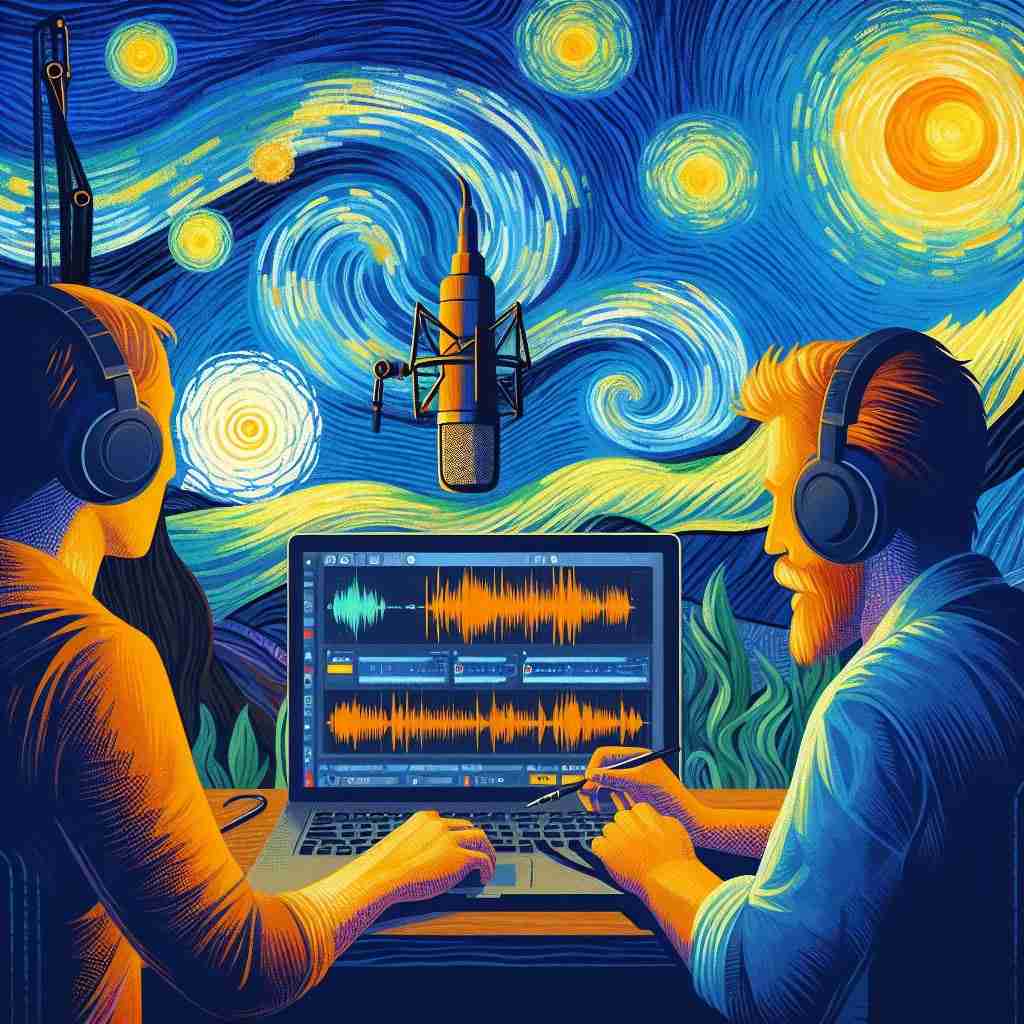
Remote Recording Revolution – AI Tools That 10X Your Production Speed
Table Of Contents
- Remote Recording Revolution – AI Tools That 10X Your Production Speed
- What If You Could Record Remotely Without Losing Quality?
- How Do AI Tools Increase Your Productivity?
- Can Technology Enhance Your Creativity In Recording?
- What Ethical Considerations Come with Using AI In Music Production?
- How Do Successful Artists Leverage AI for Remote Recording?
- In What Ways Can Collaboration Be Improved Through AI Tools?
- How Can We Maintain Human Touch In an AI-Driven Industry?
- Conclusion
- Other Resources
- Glossary Of Terms
- Other Questions
- Haiku
- Poem
- Checklist
What If You Could Record Remotely Without Losing Quality?
Imagine a world where distance doesn’t dictate the depth of your conversations. Picture yourself sitting in your study, a cup of coffee steaming beside you, and across miles, your friend is doing the same. You share a laugh, a story, an experience that binds you together despite the physical separation. Now, what if you could capture that moment, every nuance, every chuckle, and every heartbeat, in crystal-clear quality? This is more than just an idea; this is the future of podcasting and storytelling.
When we think about recording remotely, we often worry about the dreaded “lag” or the drop in sound quality that can rob a moment of its magic. But what if the technology existed for us to connect as if we were sitting side by side? High-quality remote recording opens a floodgate to genuine conversations that resonate with listeners. It eliminates the barriers of geography and gives voices that might never cross paths a chance to intertwine, creating a rich tapestry of stories.
Let’s consider an analogous moment: Think of a tight-knit group of friends reminiscing about their childhood. They gather around, nostalgic and hungry for authenticity. Yet one lives in another city, and the others can’t travel. Now, envision that friend dialing in on a voice chat, warmth flowing through the speakers, not just sound, but a connection pulsing through the air. This technology allows us to replicate that atmosphere in podcasting. You can bring heartfelt stories, innovative ideas, and diverse perspectives from every corner of the globe right into your living room.
Moreover, the ethical component is undeniable. With every story recorded with high fidelity, you are preserving a voice, a truth that may otherwise fade into obscurity. By prioritizing quality, you ensure that every narrative is respected, giving value to both the speaker and the listener. This is about amplifying diverse voices, letting stories blossom without being stifled by technical limitations.
As we navigate this world of connections, think of the authority you gain as a podcaster. You’re not just a voice; you become a vessel for stories that merit to be shared. Each recorded conversation becomes a testament to human resilience and creativity, fostering a sense of community.
In this realm of limitless possibilities, you’re invited to be the pioneer pushing boundaries. Imagine the impact of creating a podcast that not only entertains but educates, inspires, and connects. This shift in how we record could reshape the narrative landscape, propelling us into a future where voices resonate—loud and clear, no matter the distance.

What If You Could Record Remotely Without Losing Quality?
What If You Could Record Remotely Without Losing Quality?
- Distance no longer limits the depth of conversations in storytelling and podcasting.
- High-quality remote recording technology enables genuine connections and eliminates geographical barriers.
- It captures heartfelt moments, creating a rich tapestry of stories and experiences.
- The ethical importance of preserving diverse voices is emphasized, ensuring every narrative is valued.
- Podcasters gain authority as they become vessels for meaningful stories, fostering community and resilience.
- This recording shift allows podcasts to educate, inspire, and connect users globally.
- A future of clear, connected voices can reshape the narrative landscape in storytelling.

What If You Could Record Remotely Without Losing Quality?
How Do AI Tools Increase Your Productivity?
How do AI tools increase your productivity? Picture this: you’re in the middle of a project, and the clock is ticking. The weight of deadlines hangs heavy, and you’re wrestling with a mountain of tasks. Just when you think you can’t go on, you plug into an AI tool, and suddenly, the chaos begins to organize itself. It’s like having a reliable partner on a rugged job site, someone who knows exactly when to hand you the right tool for the task at hand.
Think of a time when you’ve felt overwhelmed—maybe you were preparing for a big presentation or juggling multiple assignments. AI tools, much like a trusty sidekick, sift through the noise, automating mundane tasks and freeing up your most valuable asset: time. They use algorithms that can assimilate vast amounts of data in the blink of an eye, allowing you to focus on the creative and strategic aspects of your work that only you can tackle. This is not just a convenience; it’s a transformation of how we approach problem-solving.
Let’s consider your creative process for a moment. When you’re knee-deep in brainstorming, having an AI tool at your side can be a game-changer. Picture it as a savvy listener, not just crunching numbers but helping you examine ideas from fresh angles—much like a podcast host encouraging guests to delve deeper. This interaction doesn’t just inspire new thinking; it fosters deeper connections with your ideas. You’re not just working harder; you’re working smarter, tapping into a well of creativity fueled by data-driven insights.
Moreover, there’s an ethical dimension here. By embracing AI tools, you’re fostering an environment of collaboration and innovation, not replacement. This approach bridges the gap between human capability and technological advancement, encouraging a workforce that thrives on synergy rather than competition. It’s not about fear of the machine taking over; it’s about empowering us to achieve more together.
Reflect on the societal impact as well. As you and your peers leverage these powerful tools, productivity benchmarks rise, job satisfaction increases, and communities prosper. The ripple effect is profound: healthier work-life balance leads to happier individuals, contributing to stronger, more resilient communities.
AAI tools stir a kind of synergy within our daily routines, urging us to cultivate not merely ordinary productivity but extraordinary potential, thus enhancing every facet of our professional lives. It’s time to embrace that partnership, unlocking new levels of efficiency and creativity, and transforming our work experience for the better.

How Do AI Tools Increase Your Productivity?
How Do AI Tools Increase Your Productivity?
- AI tools help organize chaotic workloads, acting like reliable partners during projects.
- They automate mundane tasks, allowing users to focus on creativity and strategic work.
- Algorithms used by AI can process vast data quickly, transforming problem-solving approaches.
- AI enhances brainstorming by providing fresh perspectives, fostering deeper connections with ideas.
- Embracing AI tools promotes collaboration and innovation, rather than competition.
- Increased productivity leads to higher job satisfaction and stronger communities.
- AI encourages extraordinary productivity and efficiency in professional lives.

How Do AI Tools Increase Your Productivity?
Can Technology Enhance Your Creativity In Recording?
In a world buzzing with digital innovation, the craft of recording has transformed into an expansive canvas, allowing creators to paint their unique stories. The fusion of technology and creativity is not just a marriage of convenience; it’s a liberation. Picture this: a young musician, sitting in a cramped bedroom, a simple microphone perched on an old desk, and yet, they have the power to connect with thousands across the globe. This is the magic of technology, which empowers us to transcend boundaries and express ourselves like never before.
The heart of this journey lies not just in the tools we use, but in how we choose to wield them. Imagine for a moment recording a podcast – a platform that turns solitary musings into shared conversations. With each word spoken, technology offers a way to reach your audience directly, fostering a sense of community that was once only a dream for many. You’re not just speaking into a microphone; you’re invoking emotion, sharing experiences, and inviting listeners to reflect on their own lives. This connection serves as a reminder that every story matters, and with the right tools, anyone can tell theirs.
From a rational standpoint, the variety of software and hardware available today allows for experimentation that was unimaginable a few decades ago. Think of digital audio workstations as a playground filled with possibilities. You can layer sounds, manipulate rhythms, or even collaborate with artists across distances. The ethical dimension, too, emerges when we see how technology democratizes creativity. No longer do we need vast resources to produce high-quality content; today’s aspiring creators can unleash their imagination with just a smartphone and a good internet connection.
However, the allure of technology also demands responsibility. It’s vital to remember that while tools can enhance our creativity, they should not overshadow the essence of what we’re creating. Authenticity is paramount; it’s about finding a balance between leveraging technology and staying true to your voice. As we navigate this thrilling landscape, let’s foster connections that celebrate the art of storytelling, whether through a captivating podcast or a dynamic recording studio session.
Ultimately, embracing technology is an invitation to innovate, to explore, and to share. It’s an opportunity to turn the whisper of an idea into a resonant audio experience, one that can touch hearts and inspire souls. So, dive in, experiment with your creativity, and let technology be the wind beneath your wings, transforming your thoughts into a masterpiece worth sharing.

Can Technology Enhance Your Creativity In Recording?
Can Technology Enhance Your Creativity In Recording?
- The craft of recording has evolved with digital innovation, enabling unique storytelling.
- Technology empowers creators to connect globally, transcending traditional boundaries.
- Recording mediums like podcasts turn individual reflections into community conversations.
- Advancements in software and hardware foster unprecedented experimentation in sound creation.
- Technology democratizes creativity, allowing aspiring creators to produce quality content with minimal resources.
- Authenticity is essential; creators must balance using technology with staying true to their voice.
- Embracing technology invites innovation and exploration, transforming ideas into impactful audio experiences.

Can Technology Enhance Your Creativity In Recording?
What Ethical Considerations Come with Using AI In Music Production?
What Ethical Considerations Come with Using AI in Music Production?
In the age of technology, where the harmonies of human creativity blend with the cold efficiency of algorithms, we find ourselves at a crossroads. The advent of AI in music production offers unprecedented potential, yet it also raises profound ethical questions that tug at the heart, head, and gut. Imagine a time when every aspiring musician had the power to create without barriers, harnessing AI as a tool rather than a crutch. It’s an exhilarating thought, yet it begs the question: at what cost?
Consider the intimate stories woven into the fabric of music. Every note and lyric often emerges from personal experiences, heartaches, and epiphanies. When a computer generates these elements, we risk stripping music of its soul. There’s something quintessentially human about pouring one’s vulnerabilities into a song, capturing a fleeting moment in time that resonates with others on a profound level. AI can mimic style, but can it replicate the emotional scars that inspire a melody? As we embrace AI, we must ask ourselves: can we maintain the authenticity of music while leveraging this technology?
On a rational level, the advantages are hard to ignore. AI can analyze vast swaths of data, taking the guesswork out of market trends, allowing producers to craft songs tailored precisely to listener preferences. Yet, this analytical prowess shouldn’t overshadow the ethical responsibility we carry as creators. Our authority lies not just in the music we produce but in how we maintain artistic integrity. Relying solely on AI-generated suggestions could lead to homogenization, a landscape where every song feels eerily familiar, lacking the unique fingerprints of individual expression.
Picture a podcast where musicians share their journeys, employing AI as a collaborator rather than a replacement. Through these stories, we hear the resonance of collaboration—an old camaraderie revitalized by new technology. It cultivates a sense of community, inviting listeners to not just consume but engage with the artistic process. By grounding AI in narratives that celebrate human experience, we bridge the gap between code and creativity, honoring both.
Ultimately, the challenge lies in striking a balance between leveraging AI’s capabilities and protecting the core of what makes music resonate. We face an opportunity to foster a creative ecosystem where technology enhances our human stories rather than eclipses them. In making conscious choices, we can ensure that while AI composes, the heart and soul of music remain undeniably human. Let’s choose to engage, to connect, and to create with intention, forging a future where technology and artistry dance together in harmony.

What Ethical Considerations Come with Using AI In Music Production?
What Ethical Considerations Come with Using AI In Music Production?
- The integration of AI in music production presents significant ethical dilemmas alongside its potential benefits.
- AI can enhance creativity, allowing musicians to create without barriers, but raises concerns about authenticity and emotional depth.
- Music often reflects personal human experiences; AI-generated elements may lack this intrinsic quality, risking a loss of soul in music.
- While AI can analyze market trends to tailor songs, there is a danger of homogenization, undermining artistic integrity.
- Collaboration between musicians and AI can foster community engagement and celebrate human experiences.
- Striking a balance between utilizing AI capabilities and maintaining the essence of music is essential for future creativity.
- Conscious choices in tech integration can ensure that the heart and soul of music remain human-driven.

What Ethical Considerations Come with Using AI In Music Production?
How Do Successful Artists Leverage AI for Remote Recording?
In the realm of creativity, there’s a palpable tension between the intimate, human touch and the cold efficiency of technology. Artists often stand on this precipice, straddling the age-old art of storytelling with the innovative tools that AI provides. Imagine the thrill of pouring your heart into a podcast, weaving tales that resonate with listeners across the globe, all from your home studio. Here lies a unique intersection—where the personal becomes universal through the power of AI.
Successful artists harness AI not just as a recording tool, but as a collaborator. It’s akin to having an inspired co-writer who always seems to know the right chord changes or rhythmic variations to bring your vision to life. Consider the emerging artist who finds that AI can analyze their past recordings, identifying patterns and suggesting arrangements that elevate their sound. This isn’t merely about efficiency; it’s about enriching the creative process. An artist can record vocals in a cozy attic on a rainy day, upload them, and let an AI suggest orchestration while they enjoy a cup of coffee—blending the personal with the advanced.
Beyond the technical applications, there’s an ethical dimension to this relationship. Artists wrestle with fears about technology overshadowing the human element, yet they often discover that AI amplifies their authenticity. It’s a tool that frees them to focus on what matters most: the message. In a world increasingly hungry for genuine connection, those heart-felt lyrics and personal stories don’t lose their weight; in fact, they become the very fabric of a larger tapestry created in collaboration with artificial intelligence.
Socially, artists are forging communities around these technologies. Imagine a group of musicians, each working remotely, using an AI platform to share ideas, feedback, and support. They turn their individual home studios into shared experiences, a symphony crafted from distinct voices, merging their creativity in ways that weren’t possible before. Podcasts emerge from these collaborative efforts, inviting listeners not just to enjoy the music but to engage with the journey of creation itself, cultivating a sense of camaraderie and shared purpose.
The heart of this endeavor lies in the stories shared along the way—moments of doubt transformed into triumphs of creativity. Artists today stand at a unique crossroads, finding not just a tool in AI but a partner that can help them weave a richer narrative, reminding us all that the journey of creation, much like any great podcast, is about connection, not just sound.

How Do Successful Artists Leverage AI for Remote Recording?
How Do Successful Artists Leverage AI for Remote Recording?
- The tension between human creativity and technology influences artists’ storytelling.
- Artists use AI as a collaborative partner, enhancing their creative process.
- Emerging artists utilize AI to analyze past work and suggest improvements.
- AI allows artists to focus on genuine messages instead of technical details.
- Communities are formed around AI technologies, fostering collaboration among musicians.
- Podcasts and shared experiences emerge from these collective creative efforts.
- The journey of creation emphasizes connection and storytelling over mere sound.

How Do Successful Artists Leverage AI for Remote Recording?
In What Ways Can Collaboration Be Improved Through AI Tools?
Imagine a construction site where every worker is equipped not only with tools but also with the collective intelligence of their entire team, communicated seamlessly through an AI interface. That’s the essence of collaboration enhanced by AI tools, and it strikes at the heart of what we do best—working together toward a common goal while harnessing our innate passions and talents.
Every job, whether in a bustling office or on a rugged worksite, has its rhythm. When collaboration is at its peak, the beats synchronize into a harmonious flow. However, when miscommunication strikes, that rhythm can turn into chaos. Enter AI tools, not as the overlords of our interaction but as the trusted partners helping us navigate the complex landscape of teamwork. They monitor discussions, manage schedules, and provide data insights, allowing us workers to focus on what truly matters—crafting our trades and sharing our stories.
Let’s consider the story of a small architectural firm that relied on manual communication methods. Projects were delayed; ideas were lost in emails; creativity was stifled as personnel felt isolated. Every late-night deadline loomed larger, threatening the very heart of their enterprise. Then they integrated an AI collaboration tool that transformed their workflow. Meetings became more focused, tasks clearer, and ideas flowed, invigorating their creativity. They found that the AI didn’t just make their work easier; it revived the spirit of teamwork. That’s the gut reaction we want to elicit: that sense of relief and empowerment, knowing assistance is just a click away.
AI can also inspire trust, breaking down the silos that so often separate teams. Rather than replacing human judgment, AI tools enhance decision-making by providing objective insights. This ethical dimension fosters a culture where collaboration thrives, rooted in transparency. Just as a podcast pulls listeners in with engaging stories, AI can weave narratives that connect individuals’ contributions, making everyone feel valued.
The magic of these tools lies in their ability to turn mundane tasks into collaborative triumphs. Imagine brainstorming sessions where everyone’s ideas, regardless of hierarchy, are valued equally. This social connection, powered by AI, fosters a community that stands together, ready to innovate.
AAI doesn’t take away the human touch; it amplifies it. Just like the best podcasts highlight the voices that matter, AI tools help us amplify our collective voice, ensuring that every contribution counts in the symphony of collaboration.

In What Ways Can Collaboration Be Improved Through AI Tools?
In What Ways Can Collaboration Be Improved Through AI Tools?
- AI tools enhance collaboration by integrating the collective intelligence of teams.
- Effective communication maximizes productivity, while miscommunication can lead to chaos.
- AI assists in monitoring discussions, managing schedules, and providing essential data insights.
- A small architectural firm improved workflow and creativity by adopting AI collaboration tools.
- AI enhances trust and transparency, supporting better decision-making without replacing human judgment.
- AI fosters an inclusive environment where all ideas are valued equally during collaborative sessions.
- The integration of AI amplifies human contributions, ensuring every voice is heard in teamwork.

In What Ways Can Collaboration Be Improved Through AI Tools?
How Can We Maintain Human Touch In an AI-Driven Industry?
In an age where artificial intelligence dominates, the challenge becomes not just the integration of technology but also the preservation of the human touch. We find ourselves in a world of automation where efficiency is prized above all, yet the warmth of human connection remains irreplaceable. It’s the difference between a warm handshake and a cold algorithm—a nuance that can’t be captured in lines of code.
Consider the story of a small-town mechanic who loves to share the tales behind his crafts. People don’t just come for repairs; they come seeking camaraderie, a shared laugh, or a moment of genuine connection. This is the human element that no AI can replicate, and it’s vital we keep that spirit alive even in the AI-driven industry. A podcast listener recently shared how her favorite mechanic made the experience as enjoyable as it was necessary. Even when confronted with the latest tech, it was the mechanic’s storytelling—his anecdotes about unexpected car problems or old family recipes—that made her feel valued. She left not just with a fixed car but with a renewed sense of community.
This brings us to the point: fostering environments where technology enhances rather than replaces the human experience is crucial. Leaders in all industries must advocate for hybrid models that prioritize human interactions alongside technological advancement. For instance, consider implementing mentorship programs where seasoned professionals guide newcomers through not just technical skills but emotional intelligence in the workplace. This boils down to a simple truth: technology should be a tool to elevate our humanity, not diminish it.
It’s essential to recognize that while AI can provide efficiency, it often lacks the ethical considerations that come naturally to humans. A critical conversation stems from reflecting on how technology impacts our relationships and well-being. The narrative shifts when we focus on enhancing the human aspect. Businesses should cultivate environments where employees are encouraged to express vulnerability and share experiences, fostering connections that resonate deeply and build trust.
Ultimately, we must embrace this balance with open hearts and minds—retaining that warmth in a cold, tech-driven world. Let’s actively engage in conversations about the role of humanity in our work, knowing that every connection we nurture is a step toward a future where technology and human creativity flourish side by side. By doing so, we can inspire not just confidence but a commitment to keeping the human touch in an AI-driven industry, ensuring that no matter how advanced our tools become, we remain, first and foremost, human.

How Can We Maintain Human Touch In an AI-Driven Industry?
How Can We Maintain Human Touch In an AI-Driven Industry?
- The integration of AI poses a challenge in preserving the warmth of human connections.
- Human interaction is irreplaceable, exemplified by a mechanic who builds community through storytelling.
- Fostering environments where technology enhances human experience is crucial.
- Hybrid models should be advocated to combine human interactions with technological advancements.
- Mentorship programs are beneficial for teaching emotional intelligence alongside technical skills.
- Businesses should encourage vulnerability and sharing among employees to build trust and deepen connections.
- A balance between technology and humanity is essential for a future that values both.
How Can We Maintain Human Touch In an AI-Driven Industry?
Conclusion
In the ever-evolving landscape of digital connection, the remote recording revolution stands as a testament to human creativity and resilience. The advent of AI tools has fundamentally changed the way we produce content and share our stories, breaking down barriers that previously silenced countless voices. Imagine a world where your creative potential is no longer shackled by the constraints of traditional recording. High-quality remote recording enables independent creators to produce impactful podcasts from the comfort of their homes, allowing stories to flourish without the weight of anxiety over technical details.
AI is not merely a facilitator of efficiency; it empowers creators to focus on the heart of storytelling—capturing genuine narratives that resonate deeply with listeners. This revolution democratizes access, transforming shy individuals sipping coffee in their living rooms into dynamic storytellers with the capacity to inspire and connect across distances. Each podcast episode becomes a powerful echo of shared experience, where authenticity reigns supreme, creating a vibrant sense of community in a world that often feels isolating.
The possibilities expand when we consider how AI enhances productivity. As these tools automate mundane tasks, they allow artists to dive into their creative process more fully. By providing valuable insights and freeing up time, AI acts like a dependable partner, enabling creators to work smarter, not just harder. This partnership fosters a culture of collaboration and innovation, paving the way for healthier work-life balances and stronger communities.
However, the integration of technology does not come without its ethical implications. The challenge lies in maintaining authenticity amid the allure of efficiency. While AI can mimic styles and trends, it cannot reproduce the emotional depth and personal touch that human artists bring to their work. Striking the right balance between leveraging technological capabilities and preserving the essence of creativity is crucial. Embracing AI as a collaborator, rather than a replacement, opens doors for greater connection and understanding.
As we navigate this new frontier, we are reminded that technology, when wielded thoughtfully, enhances our humanity. The stories we share, the laughter we evoke, and the connections we make matter most. So, step into this remote recording landscape with an open heart and a mindset geared toward connection. Each click, each recording, and each shared story is not just about content creation; it is about crafting a tapestry of experiences that speaks to the core of what it means to be human. Embrace this revolution; let your voice be heard, and together, we’ll inspire a future where technology amplifies our collective narratives.

Conclusion
Conclusion:
- The remote recording revolution showcases human creativity and resilience in digital connections.
- AI tools redefine content production, allowing independent creators to share impactful stories from home.
- This democratization of storytelling transforms introverted individuals into influential narrators.
- AI enhances productivity by automating mundane tasks, enabling deeper creative engagement.
- The partnership between creators and AI fosters collaboration, innovation, and improved work-life balance.
- Maintaining authenticity is crucial as technology evolves; AI cannot replicate human emotional depth.
- Embracing AI thoughtfully enhances humanity while amplifying shared experiences and connections.

Conclusion
Other Resources

Other Resources
Here is a list of other resources you can review online to learn more:
- SquadCast
- iHeartRadio
- Podcast Republic
- Castro
- Patreon
- Flickr
- VK
- Riverside.
- Overcast
- Player FM
- Blubrry
- Medium
- Jiosaavn
- AI Success Cast
- Fountain
- Apple Podcasts for Creators
- deviantART
- Column1
Use This Prompt To Get More Resources With Your Favorite Online AI Tool: Please provide me with a list of online articles with their URLs in a bulleted list that I can read regarding Remote Recording Revolution – AI Tools That 10X Your Production Speed

Other Resources
Glossary Terms
Remote Recording Revolution – AI Tools That 10X Your Production Speed – Glossary Of Terms
1. AI (Artificial Intelligence): Technology that simulates human intelligence to perform tasks such as audio processing and editing.
2. Remote Recording: The process of capturing audio or video content from a location away from a traditional studio setup, often leveraging the internet.
3. Production Speed: The efficiency and speed at which audio or video content is created, edited, and delivered.
4. Collaborative Tools: Software that allows multiple users to work on a project simultaneously, enhancing teamwork in remote settings.
5. Cloud Storage: Online storage services that enable users to save and access files from any location, facilitating remote collaboration.
6. Digital Audio Workstation (DAW): Software used for recording, editing, and producing audio files, fundamental in remote recording setups.
7. Editing Software: Programs that allow users to manipulate audio recordings, including cutting, mixing, and applying effects.
8. Remote Collaboration: Working together on projects from different locations, often using online tools and platforms.
9. Latency: The delay between audio input and output in remote recording sessions, affecting real-time collaboration.
10. Streamlining: The process of simplifying workflows to enhance efficiency in production.
11. Audio Interface: Hardware that connects microphones and instruments to a computer, crucial for high-quality recording.
12. File Compression: Reducing the size of audio files for easier sharing and storage without significant loss of quality.
13. Voiceover: A production technique where a speaker’s voice is recorded separately and added to video or audio content.
14. Microphone Selection: Choosing appropriate microphones based on the recording environment and intended use.
15. Signal Processing: Techniques applied to audio signals to modify and improve sound quality.
16. Production Workflow: The step-by-step process of creating audio content from conception to delivery.
17. Multitrack Recording: Capturing multiple audio sources separately to mix them later for a polished final product.
18. Virtual Instruments: Software that emulates real musical instruments, used in music production without physical equipment.
19. Jingle Creation: Composing catchy tunes meant for advertising or branding purposes.
20. Sound Design: The art of creating audio elements that enhance the storytelling in media projects.
21. Live Streaming: Broadcasting audio or video content in real-time over the internet.
22. Batch Processing: The ability to edit multiple audio files simultaneously, speeding up production time.
23. Plugin: Software that adds additional features or effects to audio editing programs.
24. Quality Assurance: The process of checking audio files for errors or deficiencies before final release.
25. User-Friendly Interface: A design feature in software that makes it accessible and easy to navigate for users.
26. Mixing: The process of combining multiple audio tracks to create a cohesive final product.
27. Recording Techniques: Various methods and practices used to capture sound effectively.
28. Automation: The use of software to perform repetitive tasks in audio editing, enhancing efficiency.
29. Feedback Loop: The process of receiving input on audio quality or content which is then used to make improvements.
30. Post-Production: The final stage of audio or video production, involving editing, mixing, and finalizing content before release.

Glossary Of Terms
Other Questions
Remote Recording Revolution – AI Tools That 10X Your Production Speed – Other Questions
If you wish to explore and discover more, consider looking for answers to these questions:
- What specific AI tools are best for high-quality remote recording?
- How do AI tools compare to professional studio equipment in audio quality?
- What hardware and internet requirements are needed for reliable remote recording?
- How much do these AI recording tools typically cost (subscription, per-use, or one-time)?
- What is the learning curve for creators new to AI-assisted recording?
- Can AI tools handle multi-track recording with remote contributors?
- How do AI tools deal with latency and synchronization between remote participants?
- What file formats and DAW integrations do AI recording platforms support?
- How much post-production time can AI automation realistically save?
- Which tasks (editing, noise reduction, leveling, mixing) are best automated by AI?
- How accurate and reliable are AI transcriptions for podcast episodes?
- Do AI tools offer real-time monitoring and feedback during live remote sessions?
- How do AI platforms preserve audio fidelity for emotional nuance (pauses, breaths, laughter)?
- What are the privacy and data security implications of uploading raw audio to AI services?
- Who owns the audio and the derivative outputs generated or processed by AI tools?
- How are AI models trained, and does training data include copyrighted material?
- What consent or disclosure practices should creators follow when using AI in production?
- How should creators credit AI contributions in show notes or metadata?
- Can AI inadvertently erase or alter a guest’s intended meaning or emotional tone?
- What safeguards exist to prevent AI-driven homogenization of creative content?
- How can creators maintain authenticity and the “human touch” when using AI?
- Are there tools to detect AI-generated or AI-altered audio?
- How do AI tools handle accents, dialects, and non-native speakers?
- Can AI assist with translation and localization for international audiences?
- What accessibility features (captions, summaries, transcripts) do AI platforms provide?
- How do successful artists structure remote workflows that combine AI and human collaboration?
- What are common collaboration features (versioning, comments, shared timelines) in AI platforms?
- How do teams manage rights, royalties, and splits when AI contributes to creation?
- What legal and regulatory risks should creators be aware of (copyright, GDPR, CCPA)?
- How do AI tools perform in noisy or low-quality recording environments?
- Are there offline or on-premise AI solutions for sensitive or confidential recordings?
- What measures prevent data breaches or unauthorized access to recorded sessions?
- How do AI updates and model changes affect previously processed content?
- What metrics should creators track to measure AI’s impact on productivity and audience engagement?
- How can creators test or audition AI tools before committing to full production workflows?
- What are the ethical implications of using AI to mimic or replace a specific performer’s voice?
- How will widespread AI adoption affect jobs in audio engineering, editing, and production?
- What contingency plans should teams have if an AI service goes offline or changes pricing?
- Where can creators find case studies or examples of successful AI-enhanced remote productions?

Other Questions
Haiku
Remote Recording Revolution – AI Tools That 10X Your Production Speed – A Haiku
Voices across the miles,
Technology weaves the tales—
Heartbeats blend in sound.

Haiku
Poem
Remote Recording Revolution – AI Tools That 10X Your Production Speed – A Poem
In this new era of sound, a revolution unfolds,
Where creativity flows, unbarred, untold.
With AI as our guide, we bridge the divide,
Turning whispers of dreams to a global tide.
From living rooms echoing with laughter and sighs,
To podcasts that reach where distance defies,
Every voice now matters, a tale to be shared,
In the symphony of stories, all hearts are laid bare.
No more anxious waits in studios confined,
Tech liberates artists, opens pathways aligned.
Automating the mundane, making room for the light,
Crafting narratives that sparkle both day and night.
Connected we stand, as producers unite,
With tools that enhance, igniting insight.
Sharing struggles and triumphs, each episode spins,
A tapestry woven where true connection begins.
But with power comes caution; we must tread with care,
For arts soul lies in stories, in the depth that we share.
As algorithms assist, let’s nurture our core,
Where human touch thrives, and emotions encore.
So let us embrace this dance of innovation,
Harnessing tech while honoring creation.
In a world driven by bytes, let humanity sing,
For in every recorded heartbeat, our stories take wing.

Poem
Checklist
Remote Recording Revolution – AI Tools That 10X Your Production Speed – A Checklist
Heart Emotional Appeals
✅______ Reflect on your personal story. What drives your passion for recording?
✅______ Identify the moments of vulnerability in your narratives. How can they connect with your audience?
✅______ Consider the stories behind your content. Are you sharing authentic experiences that resonate?
Head Rational Appeals
✅______ Evaluate the quality of your recordings. Are you using the best AI tools available for optimal sound?
✅______ Analyze your workflow. How can AI enhance your efficiency and creativity?
✅______ Research the tools and resources. Are you aware of the latest advancements in remote recording technology?
Gut Ethical Appeals
✅______ Assess the impact of your recordings. Are you amplifying underrepresented voices?
✅______ Ensure authenticity. Are you maintaining the human touch in your recordings while utilizing AI?
✅______ Reflect on the responsibility of your content. How do your stories contribute to a larger narrative of community and connection?
Authority Credibility Appeals
✅______ Review testimonials and success stories. Who are the thought leaders you can learn from in remote recording?
✅______ Seek out expert insights. Are you following industry trends and innovations?
✅______ Collaboration. Are you engaging with other creators for feedback and growth?
Narrative Storytelling Appeals
✅______ Create a compelling narrative arc in your projects. How do your recordings unfold a journey?
✅______ Incorporate storytelling techniques. Are you capturing the emotional essence of your experiences?
✅______ Build a narrative community. How can you engage listeners in the story of your creative process?
Social Community Appeals
✅______ Connect with other creators. Are you participating in forums or groups to share insights and support?
✅______ Foster listener engagement. How can you encourage feedback from your audience to improve your work?
✅______ Celebrate collective achievements. Are you highlighting contributions from your collaborators and community members?

Checklist
At PodcastBig, we help people who want to learn about podcasting by collating information and news about podcasting.
Be sure to read our other related stories at PodcastBig to learn more about podcasting.